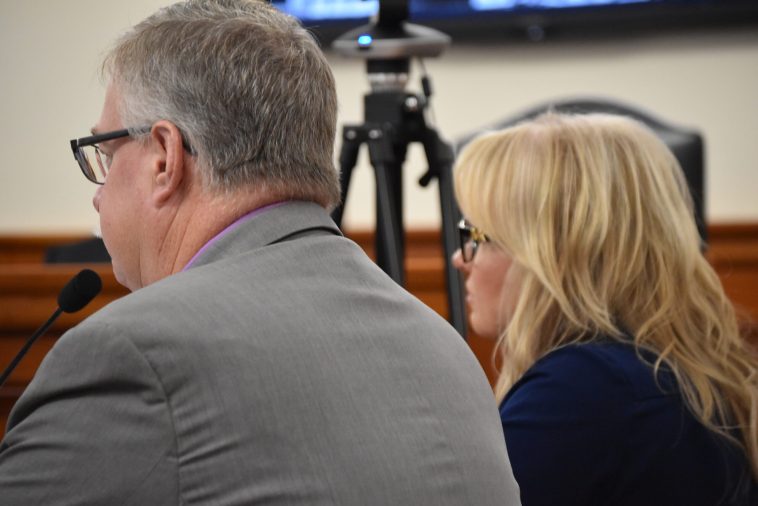

Assessing the Risks: Protecting Families in Assisted Reproductive Treatments
The recent legislative proposals in Michigan regarding assisted reproduction have stirred significant debate, much like the careful planning needed for a successful home renovation project. Families, much like homeowners, deserve assurance that what they invest in—their future—is built on a foundation of trust and reliability. With emotional stakes high and financial considerations immense, the idea of fraud in fertility treatments cuts to the core of what it means to protect not only property but also the essence of family life.
Recent discussions in the Michigan House Committee on Families and Veterans highlight an emerging attempt to penalize doctors for any deceptive actions during in vitro fertilization (IVF) procedures and other assisted reproduction techniques. Just as homeowners worry about hidden defects during a remodel, many prospective parents are now grappling with the possibility of hidden misrepresentations in the fertility process.
Examining Fertility Fraud Issues and Patient Trust
Fertility fraud is a term that has emerged to describe instances where the details of a donor’s background are misrepresented or not fully disclosed to hopeful parents seeking alternative family-building options. In one instance, a woman discovered later in life that the very doctor who helped her parents conceive was, in fact, her biological father—a revelation that impacted her deeply. Equally jarring is the story of another individual who learned about a shocking family secret: having at least 82 half-siblings due to irregularities in sperm donor records.
The personal testimonies shared before the committee reveal the tangled issues and complicated pieces inherent in such cases. These real-world examples not only expose the hidden complexities and subtle details that many families must confront unexpectedly but also underline an urgent need for transparency and accountability.
Trust between patients and fertility clinics is much like the trust homeowners place in the contractors they hire—both relationships are built on the expectation that all necessary information is disclosed. When the truth is obscured or distorted, it creates an environment full of problems where individuals are left to pick up the pieces of a more significant personal and emotional renovation than they had ever anticipated.
Challenges in Regulating a Multi-Billion Dollar Fertility Industry
The fertility industry, projected to be worth nearly $40 billion soon, operates in a landscape that many find overwhelming, much like an extensive home improvement project without clear blueprints. Despite its vast size and the intimate nature of its services, regulation in this sector remains surprisingly light. In fact, the only federal requirement currently enforces tests on donors for communicable diseases—a rule that barely scratches the surface of what comprehensive oversight might entail.
When you compare this to the rigor of building codes and safety standards in home construction and remodeling, the contrast is stark. Just like homeowners who invest in inspections and permits to avoid potential legal and safety issues, patients and families seeking fertility treatments are in need of a similarly robust protective framework. However, as critics have pointed out, the introduction of additional legal requirements might also lead to unintended consequences.
The challenge lies in finding the balance between protecting future children and families from exploitation and ensuring that medical professionals have the freedom to provide vital services without fear of being unduly penalized for aspects beyond their control. Much like a delicate home renovation, too much interference can lead to delays and a reduction in quality, leaving those who need services facing longer waits and fewer options.
Understanding the Proposed Bills and Their Intended Protections
The legislation currently before the Michigan House Committee on Families and Veterans is designed with the intention of introducing harsher penalties for what is seen as fraudulent practices in fertility treatments. Introduced by State Representatives John Roth, Alicia St. Germaine, and Samantha Steckloff, the bills aim to crack down on situations where donors’ information is either not accurately conveyed or entirely misrepresented.
To better understand the proposed measures, consider the following table summarizing the key elements:
| Aspect | Description |
|---|---|
| Goal | To penalize fraudulent activities by medical professionals in the fertility industry. |
| Main Concern | Cases where donor information is misleading or incomplete. |
| Proponents | State Representatives John Roth, Alicia St. Germaine, and Samantha Steckloff. |
| Key Testimonies | Personal stories of emotional pain and family upheaval stemming from undisclosed donor details. |
| Industry Oversight | An effort to introduce a more structured system in contrast to the current minimal federal intervention. |
Proponents note that these bills do not seek to limit access to IVF and assisted reproduction; rather, they are striving to ensure that families receive the exact treatment they pay for, with full disclosure of all relevant details. This mirrors the process of verifying that contractors follow building plans precisely, ensuring that homeowners are not blindsided by unforeseen issues during major renovations.
On the other hand, critics are concerned that these measures might impose an almost impossible standard on healthcare providers. They argue that holding physicians responsible for every inaccurate or incomplete detail—often provided by the donors themselves—could make the practice of fertility treatment even more challenging.
Potential Impact on Medical Professionals: Balancing Safety and Access
Stephanie Jones, the founder of the Michigan Fertility Alliance, has voiced strong objections to the proposed legislation. Her primary concern revolves around the notion that these new requirements might discourage doctors from offering assisted reproduction services. By increasing the potential legal risks for physicians—making them liable for any false or misleading donor information—the legislation may inadvertently limit access to a critical area of care.
Many in the medical community fear that the added accountability could push well-intentioned, caring doctors away from this field. In a way, it is similar to how overly strict building codes can sometimes discourage innovative home improvement projects because contractors become wary of potential fines and liabilities. Here are some of the key points raised by critics:
- The risk of criminalizing honest physicians for errors that are not entirely within their control.
- The possibility of reduced willingness among doctors to participate in fertility treatments, which could lead to fewer available services for patients.
- A broader interpretation of what constitutes ‘misleading information’ that might encompass minor, unintentional discrepancies.
- The long-term impact on patient access, as fewer professionals entering the field may lead to a competitive decline similar to a shortage of skilled contractors in a booming housing market.
Critics argue that such measures might set off a chain reaction: reduced availability of expert care, longer wait times for procedures, and ultimately, an environment where families are left feeling even more alone in their quest for parenthood. These concerns highlight the nerve-racking balance between enforcing accountability and maintaining the integrity of health services—a balance that is as delicate as choosing between quality materials and cost-saving shortcuts in any home improvement project.
Emotional Toll on Families: Real-Life Stories of Betrayal and Confusion
One of the most heartrending aspects of the debate involves the personal stories of individuals who have been caught in the crossfire of fertility fraud. Jaime Hall, a resident of Traverse City, shared her story of discovering that the man behind her parents’ fertility treatment was actually her biological father—a revelation that not only upended her sense of identity but also inflicted lasting emotional pain.
Similarly, Lynne Weiner Spencer, who learned as an adult that she had at least 82 half-siblings due to irregularities with donor disclosures, described the revelation as “overwhelming.” These stories underscore the deeply personal consequences that can occur when critical details are obscured or omitted. Just as a hidden flaw in a house’s foundation can lead to dire structural failures, undisclosed genetic information can unsettle the lives of many who entrust their families to a system they believed was transparent and accountable.
These personal accounts emphasize how deception in the fertility process isn’t merely a legal or technical issue; it is a matter that burdens families with unexpected twists and turns, complicating what should be a joyful journey toward parenthood. The emotional ramifications are intense, affecting not only the individuals involved but also the extended network of relatives and friends who share in their grief and confusion.
While some argue that the proposed legislation is a crucial step toward preventing future heartbreak, others worry that over-regulation might force families into further uncertainty by limiting available treatment options. The stakes are incredibly high—a flawed system can cause irreversible emotional damage, yet a heavily regulated one might deprive desperate parents of the means to start a family.
Transparency and Accountability in Fertility Clinics: Ensuring Trust
A key pillar of the debate centers on the role of transparency. In an ideal world, fertility clinics would provide complete and accurate information about every aspect of assisted reproduction, and patients would be fully informed of every twist and turn in the process. Yet, in a multi-billion dollar industry operating behind closed doors, accountability can often be hard to ascertain.
Many stakeholders argue that enhanced transparency measures are not only essential but also super important for building trust between clinics and the families they serve. To understand this better, consider the following bulleted list outlining potential measures to improve accountability:
- Mandatory, standardized disclosure forms for donor information that include detailed educational, medical, and personal background.
- Regular audits and oversight by independent bodies, similar to how home inspectors verify that building permits are followed during renovations.
- Clear guidelines on the responsibilities of both donors and medical professionals, ensuring that each party understands the limits of their role.
- A centralized registry where donor information can be verified independently, echoing the importance of using certified contractors and materials in home repairs.
- Enhanced counseling services for prospective parents to help them understand the fine points and subtle details involved in assisted reproductive procedures.
By implementing such measures, the industry could address many of the tangled issues and hidden challenges that currently leave families in the dark. Ultimately, transparency is a must-have attribute that builds trust—just as thorough inspections and accountability measures are crucial in home improvement projects.
Balancing Regulation and Access: Charting a New Course for Assisted Reproduction
One of the most critical questions raised by the ongoing debate is how to protect families from fraudulent practices without further restricting access to crucial medical services. Proponents of the new legislation maintain that the intent is not to clamp down on legitimate IVF procedures but to ensure that families who seek such services receive exactly what they were promised. However, critics warn that increased legal liability may inadvertently cause a decline in available services, as physicians might retract from offering advanced fertility treatments altogether.
This debate echoes a common conundrum in home improvement projects. Imagine a scenario where building regulations become so strict that innovative contractors shy away from taking on complex projects, fearing legal repercussions for any minor misstep. The result would be a market where high-quality improvements become scarce, leaving homeowners with fewer options for necessary repairs or upgrades. In the realm of assisted reproduction, too little access to expert care could mean that families find themselves with limited choices, thereby exacerbating an already nerve-racking situation.
Further complicating this matter is the issue of donor accountability. When donors—and not necessarily the doctors—are the source of some of the incorrect or misleading information, placing the entire burden on healthcare providers appears both unfair and counterproductive. The proposed bills aim to cover these problematic areas but also end up raising questions about how much control any single party should have over the entire process.
To address these concerns, it may be necessary to explore alternative regulatory frameworks. For instance, establishing a joint oversight committee comprising medical professionals, legal experts, and consumer advocates could help to strike a balance, ensuring that the rules protect families without pushing experts away from the field. Such an approach would be akin to how homeowners might work with multiple experts—a contractor, an architect, and a building inspector—to ensure that every step in a renovation is carefully planned and executed.
Drawing Parallels Between Home Improvement and Reproductive Technology Regulation
At first glance, the worlds of home improvement and reproductive technology might seem remarkably different. However, both fields share a common thread: they involve complex, often confusing bits of technical knowledge and require an environment of trust. In home improvement, homeowners rely on the honesty and expertise of skilled professionals to transform and secure their living spaces. Similarly, individuals and couples seeking fertility treatments place their deepest hopes and vulnerabilities in the hands of medical professionals.
Consider the following comparisons that draw parallels between the two fields:
- Transparency and Accountability: Just as homeowners expect a clear, itemized estimate of all the work to be done, prospective parents expect complete transparency from fertility clinics. Hidden fees or undisclosed donor information can devastate trust, just as unexpected costs can derail a home renovation budget.
- Risk Management: Home renovation projects often come with the risk of structural issues or building code violations. Likewise, assisted reproduction carries risks—not just medically but emotionally—when the integrity of processes is questioned. Both scenarios require thorough risk assessments and strong safeguards.
- Balancing Regulations and Flexibility: Overly stringent building codes can stifle creativity and innovation in home design, while overly strict regulations in fertility care might deter skilled professionals from offering these services. Both industries must strike a balance between sufficient regulation for safety and flexibility to foster innovation and access.
- Personal Impact: A poorly executed home improvement project can leave lasting scars on a homeowner’s peace of mind and property value. Similarly, errors in the assisted reproduction process can have profound, long-lasting emotional and familial impacts on individuals who have already invested so much hope into their future.
These comparisons emphasize the idea that regulation, when thoughtfully implemented, can serve to better protect and empower consumers in vastly different domains. Whether you are renovating your kitchen or rebuilding the foundations of your family, the guiding principles remain the same: honesty, accountability, and an unwavering commitment to quality.
Reflections on the Path Forward: Seeking a Balanced Approach
The current debate raises an important question: How can policymakers ensure that the fertility industry evolves to address wrongful practices while still guaranteeing that those in need of its services have access to them? The answer may lie in finding a middle ground, where accountability measures are tailored to address the nerve-racking twists and turns of this unique industry without overburdening its practitioners.
Here are several ideas that could help chart a balanced path forward:
- Enhanced Collaborative Oversight: Form a panel that includes medical experts, legal professionals, consumer advocates, and even representatives of the fertility clinics. Such a panel would work toward creating guidelines that are strict enough to protect families while remaining flexible enough to account for the inherent uncertainties in donor information.
- Incremental Implementation of Regulations: Instead of imposing sweeping changes overnight, the new measures could be introduced gradually. This phased approach would allow medical professionals time to adjust, much like slowly implementing changes during a home renovation to prevent disruption.
- Increased Support for Medical Practitioners: Develop training programs and support systems that help doctors navigate the often confusing bits and hidden details of donor data management. By arming professionals with clear guidelines and resources, the risk of unintentional errors could be reduced significantly.
- Public Awareness Campaigns: Similar to how homeowners are educated about the ins and outs of construction projects, prospective parents should be provided with comprehensive, easily understandable information about their rights and the specifics of assisted reproduction. This can empower families to make informed decisions and help them steer through any potential pitfalls.
In essence, a collaborative approach—one that encourages dialogue between all involved parties—could be the key to crafting regulations that are measured and effective. It is a strategy that recognizes the essential needs of both families looking for help and the medical professionals striving to provide it, much like the balanced conversation between a homeowner and their trusted contractor over the best way to fix a leaky roof.
Lessons for Policymaking: The Intersection of Ethics, Emotion, and Regulation
The ongoing legislative discussions in Michigan remind us that when dealing with intensely personal subjects, a one-size-fits-all solution rarely works. When lines of accountability blur between personal responsibility and professional judgment, the outcomes can be loaded with issues that require thoughtful review and nuanced approaches.
Ethical considerations, especially those that deal with family creation and the intimate process of joining genetic legacies, demand a careful analysis of every little twist and subtle detail. The proposed bills, in their effort to combat fertility fraud, offer a framework that could redefine the standards of accountability in the fertility industry. However, it is crucial that lawmakers remain mindful of the potential risks—in particular, the possibility of discouraging excellent physicians from practicing in a field that already contends with many intimidating challenges.
A balanced perspective would require policymakers to walk a fine line between safeguarding the emotional well-being of families and ensuring that biological donors and medical professionals are not unfairly burdened. It is a call for legislation that respects the complicated pieces of personal identity, much akin to how a homeowner must respect the unique characteristics of their property when planning improvements. Dishonesty in either realm can lead to long-lasting structural and emotional damage.
Moreover, any future policy should also consider the broader context, both ethically and economically. The fertility industry not only holds the promise of helping families grow but also represents a significant economic sector with far-reaching implications. Just as transparent and well-regulated home improvement practices can boost property values and secure communities, reliable and trustworthy fertility services can instill confidence in a system that touches on the most personal aspects of human life.
Balancing Innovation With Integrity: Exploring Future Directions
As the debate continues, one cannot ignore the need for innovation combined with a steadfast commitment to integrity. Revolutionary technology has reshaped home improvement over recent decades, with smart devices and energy-efficient materials now commonplace. In a parallel manner, advancements in medical technology have ushered in new techniques for assisted reproduction, each promising to bring hope to those who might otherwise be left out.
Yet, with innovation comes the responsibility to understand the fine points of these techniques and to manage the hidden complexities that can arise. For example, new methodologies in donor matching and genetic screening offer tremendous benefits, but they also introduce an array of little details and potential sources of error that could have serious repercussions if not managed properly.
Future legislative efforts should therefore focus on two primary goals:
- Fostering Innovation: Encouraging continuous improvements in reproductive technology while ensuring that the right safeguards are in place. Much like the evolution of eco-friendly building practices, medical innovation must be supported without compromising ethical standards.
- Maintaining Integrity and Trust: Creating robust systems for verifying donor information and ensuring that every stakeholder—from the donor to the doctor—operates within clear ethical guidelines. Navigation through this maze of responsibilities should be handled with the same care and precision as designing a home with energy-efficient systems that balance modern convenience with reliability.
This forward-thinking approach does not view regulation and innovation as opposing forces but rather as complementary elements. When integrated properly, stringent standards can coexist with cutting-edge techniques to form a system where protection and progress move hand in hand. Families can then be assured that the treatments they receive not only offer hope but also adhere to the highest standards of honesty and accountability.
Conclusion: A Call for Thoughtful Review and Balanced Regulation
In conclusion, the legislative efforts in Michigan to curtail fertility fraud present an opportunity to reexamine the delicate balance between protection and accessibility. Much like the careful planning and oversight required for major home improvement projects, ensuring fairness in assisted reproductive treatments demands both meticulous regulations and the flexibility to adapt to evolving challenges.
Policymakers, medical professionals, and consumer advocates must work together to craft measures that address the nerve-racking twists and turns of the current system without inadvertently penalizing those who provide essential care. This call for a measured approach is as critical in the world of fertility treatments as it is in ensuring that our homes remain safe havens built on trust, transparency, and quality workmanship.
As we move forward, let us remember that every decision taken in this highly sensitive area carries ramifications that extend far beyond legal texts. It affects lives, families, and the future of medical innovation. By taking a closer look at the current proposals, learning from the successes—and mistakes—of other regulated industries, and engaging in an honest dialogue that values both protection and progress, Michigan and other states can pave the way for a fair and balanced system.
Much like a well-executed home renovation that transforms a house into a loving home, thoughtful and balanced reproductive legislation can transform the fear and confusion of family planning into a pathway filled with clarity, trust, and hope. It is our collective responsibility to ensure that every twist and faint detail is examined, so that this crucial aspect of life remains protected, respected, and continuously improved.
This ongoing debate—and the decisions it prompts—will serve as a defining moment for those who believe in the importance of transparent, accountable, and compassionate care in the field of assisted reproduction. As families, medical professionals, and legislators alike strive to find their path forward, the priority must always be to secure an environment where integrity is not compromised, and every family has the chance to flourish without fear of betrayal or exploitation.
The conversation has just begun, and it is loaded with issues that call for critical reflection and cooperative planning. For those of us who have witnessed the transformative power of well-planned home improvements, the parallel in the realm of assisted reproduction is all too clear: a strong foundation of trust and openness is essential for any future that promises growth, stability, and lasting happiness.
In our homes and in our lives, care, attention to detail, and a commitment to ongoing improvement are the cornerstones of a safe and secure future. As the debate around fertility fraud regulations unfolds, it is imperative that all involved steer through these complicated pieces with both precision and compassion, ensuring that every family can build their future on a foundation as solid as the best-crafted home renovation.
Originally Post From https://michiganadvance.com/2025/11/05/michigan-house-committee-considers-legislation-to-penalize-doctors-for-fraud-in-fertility-treatments/
Read more about this topic at
Michigan House committee considers legislation to …
Fertility fraud